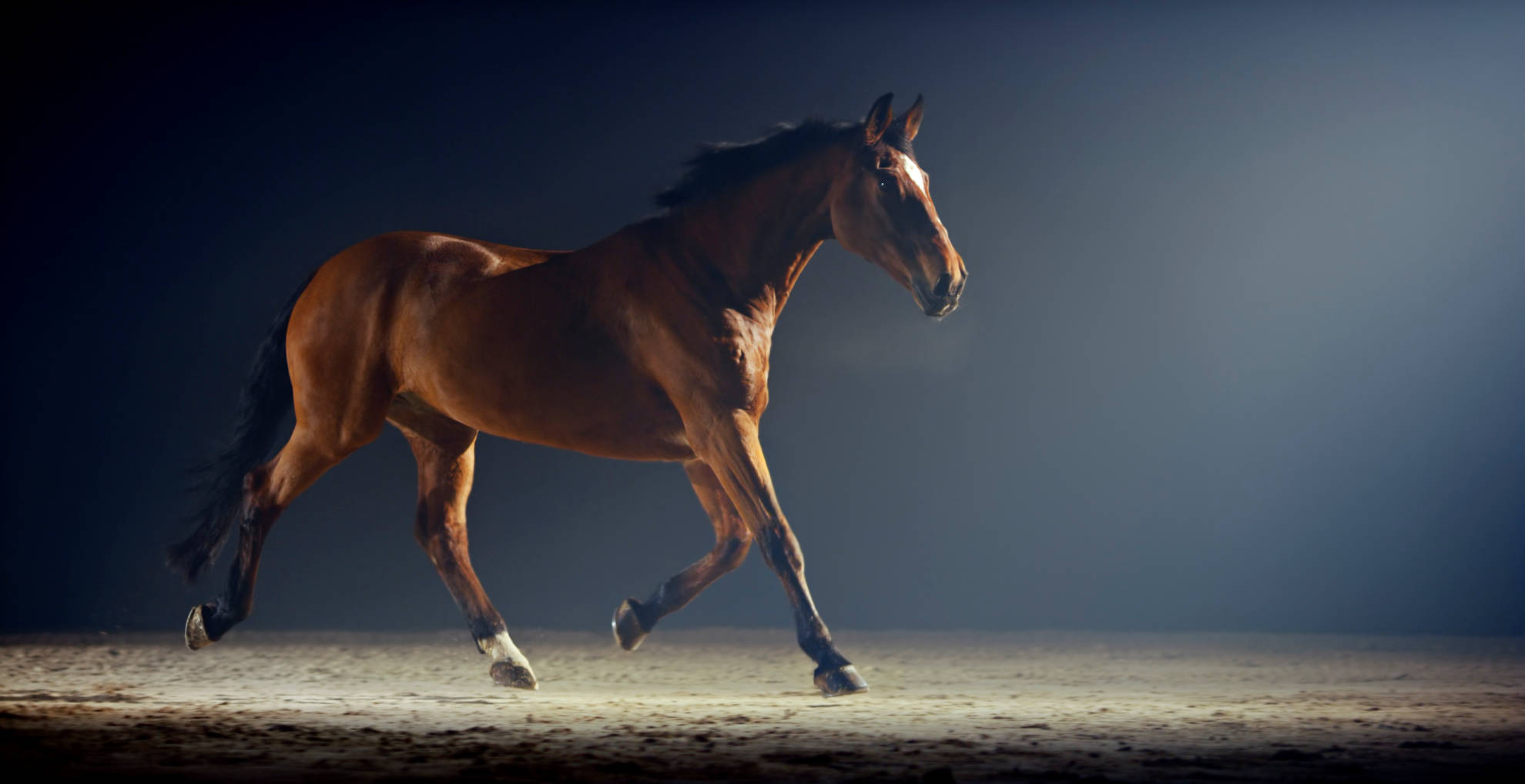
The horse is a formidable mirror of our behaviours and emotions, it subtly perceives our vibrations and energy. As such, it is an excellent revealer of our way of being and acting with others.
The horse is a true expert in communication and leadership, it does not judge and mirrors our gestures and emotions.
Naturally, the horse seeks a leader to trust, respect, and follow. Its non-verbal communication is direct and instinctive, scanning us even before we are aware of it.
Through its extrasensory abilities, not through mind, it instantly highlights the inadaptability between what a person believes expressing and what they are expressing.
It is via non-verbal and postural communication that the exchange can be expressed.
To communicate effectively, our three modes of communication must align according to their importance and impact on others (what the other perceives) :
- 55% non-verbal (body language, facial expressions, gestures, etc.)
- 38% para-verbal (intonation, silence, pronunciation)
- 7% verbal (words)
Horse teach me …
An equicoaching session offers awareness and a quick identification of the impact of our posture and emotions, essential to any communication, especially in management situations, collaborative projects, team cohesion, or simply with oneself.
The horse detects the slightest irregularity without judgment, either by refusing to participate or by turning its back. Spontaneous reactions give the opportunity to look deep within ourselves ,to see what is happening and what we could transform.
In contact with the horse, we become aware of what our gestures, voice’s tone, and posture can betray.
Through this experience, the coachee will naturally find its true alignment (head/heart/body). This alignment is validated by the horse as values of leadership, to follow and participate in the exercises. For humans, this results in a clear understanding and integration of essential values for the authentic development of our charisma and radiance.

Intervention Areas :
- Developing leadership and a managerial posture
- Becoming aware of the effective and ineffective behaviours as a leader
- Better managing stress, fears, and barrier (beliefs)
- Developing listening and observation skills
- Learning to communicate through PIH (Posture, Intention, and Heart)
- Delegating and trusting oneself
- Identifying resistances and barriers
- Learning to let go consciously
- Increasing emotional intelligence
- Freeing oneself from ego’s illusions
- Facilitating to release emotional charges (crisis, pressure, conflicts, etc.)
- Connecting the team for rapid scaling, requiring creativity, lucidity, and resilience
How does a session unfold ?
Equicoaching is practiced on foot, no equestrian knowledge is necessary. It involves communication activities in a human-animal relationship. The interest lies in being in relation with beings, whose modes of communication are not mastered, prompting us to adapt by drawing on often unsuspected resources.
The exercises are defined according to the objectives desired by the coachee or team and are conducted by a professional in the equestrian and coaching fields.
The first step is to create a connection with the horse through the interaction of our posture, intention, and true alignment, without force or constraints.
This step is often the first “gift” the horse offers us, particularly through the mirror of the non-verbal aspects within us but rarely use; such as body language, intuition, appropriate gestures, anchoring, touch, feeling, and observing.
In this regard, the gestures and emotions, in contact with horses are instinctive and accurate, having priority over any behaviour resulting from an analysis managed by the cerebral cortex.
It is thanks to this connection with the emotional zone that our “defences” fall, putting us in a state of great receptivity and integration.
Through this unique experience, accompanied by physical and emotional manifestations, we become aware of our limits, barriers, and certain belief that hinder our relationships with others.
By changing our posture and intention, it triggers the collaboration of the animal—a magical moment!
At the end of the session, each participant leaves with precise answers about the origins of their communication difficulties, blockages, fears, etc., providing a clear vision of areas for improvement to work on.
Sessions are organized at the equestrian facilities of partners referenced on the national territory and according to your geographical request.
Partner in Equicoaching
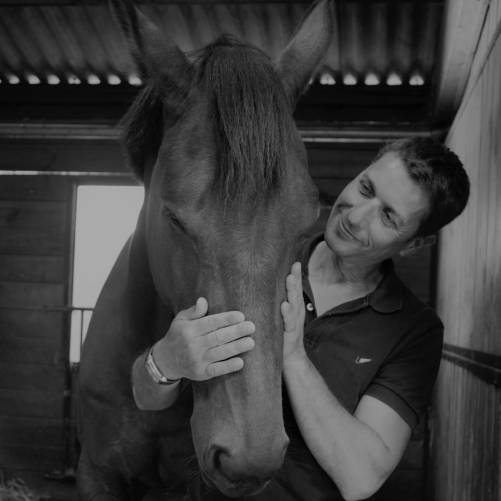
David Lagneux-Tardy NLP Coach, horseman, instructor, equicoach.